Wednesday, November 18, 2015

Are Aliens Really Out There?

The answer might surprise you! 
Listen to the vocabulary Vocabulary Link
extraterrestrial

from outer space
My sister thought she saw an extraterrestrial creature, but it turned out to be a raccoon.


These dark, narrow, 100 meter-long streaks called recurring slope lineae flowing downhill on Mars are inferred to have been formed by contemporary flowing water. Nasa confirms-evidence-that-liquid-water-flows-on-today-mars
A study suggests the universe could have triple the number of stars scientists previously calculated. For those of you counting at home, the new estimate is 300,000,000,000,000,000,000,000. That's 300 sextillion!
Sextillion-stars 
Milky Way, Photo by John Lemieux, on Flickr
Stunning Photos 


The Day it Happened! 
Are you surprised?
The Martians Discover a Telephone  


Updated War of the Worlds FL Movie 
Aliens Discover a Phone 
BrainPop Movie 

How to draw an alien. Draw a Cartoon Alien
alaskalib

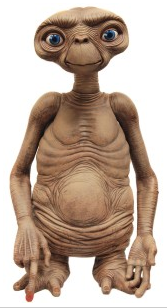
ET Extra-Terrestrial


Tuesday, November 17, 2015

Achieve Article: What does it take to be healthy?

Achieve 3000 provides informational text, vocabulary, and comprehension questions (1-8) Reading Strategies
Day 1: 
Begin with Pre-Reading Strategies
Explain in 10 words or more what it takes to be healthy.
Begin reading "Is Happiness Healthy" Article
Part of the article


Then list 10 things that you do for happiness.
Day 2:
Now re-read Is Happiness Healthy? and . . .
Answer questions 1-8 hard copy read  together
1. Before Poll
2. Read the Article
3. Article 1-8 questions send results
4. Thought Questions requires 5-7 sentences: Topic sentence, details from the
article, and concluding sentence. (Located in Google Classroom)
5. Stretch Activity, if your score was less than 75%

How would you compare the article with the video below?
Compared with
Healthyfood.co.nz/
SuperSizeStudy
Videos: SupersizeMe
Compare Create a TemplateCCSS.ELA-Literacy.RI.6.9
Compare and contrast one author's presentation of events with that of another


Wednesday, November 11, 2015

Bear Attack


Bear Attack: The Story of Seven Boys and One Grizzly. Bear Attack Story

Seven high school students were near the end of their month-long survival course in the Alaskan wilderness, but the real schooling began when they came face to snout with the wildest thing of all.


Kindle Books to Read

Range Map: Grizzly Grizzly Bear Facts

We were reading Roosevelt's encounter with a Grizzly. "Looking down into a valley, from a rocky ridge, he saw a dark object, which he discovered was a large grizzly bear.  He fired, and the bear giving a loud grunt, as the bullet struck, rushed forward at a gallop into a laurel thicket.  Roosevelt paused at the edge of the thicket and peered within, trying to see the bear, but knowing too much about them to go into the brush where he was."Continue reading in Bookrags
Freebookstoread

Theodore Roosevelt 

Nationalgeographic.com

Ursus arctos horribilis

Wildlife Library 


 Alaska Notebook Series


Monday, November 9, 2015

Article of the Week_Alaska News 4 Plane Crash Survivors

4 plane crash survivors swam to shore through 5-foot seas 

 Hypothermia

CSS.ELA-Literacy.RI.6.2
Determine a central idea of a text and how it is conveyed through particular details; provide a summary of the text distinct from personal opinions or judgments.
Use following criteria:
Taken from Response Rubric
 

Pairing the article with the Fisherman's Article

Thursday, November 5, 2015

The Elephant's Child_Rudyard Kipling


Seven Blind Mice Text "It's a pillar," says one. "It's a fan," says another. One by one, the seven blind mice investigate the strange Something by the pond.
Pair with the National Geographic
Have an adult Read the Story
OR Listen to the Elephant's Child 


Select one of the following: Place, Sequence, Person, or Means. Then answer the questions in that section.

Questions - What, Why, Where, When, Who & How
Place:
Where is it done?
Why is it done there?
Where else might it be done?
Where should it be done?
Sequence:
When is it done?
Why is it done then?
When might it be done?
When should it be done?
Person:
Who does it?
Why does that person do it?
Who else might do it?
Who should do it?
Means:
How is it done?
Why is it done that way?
How else might it be done?
How should it be done?